Cinema as Architecture Theatre as Therapy

Shimmering Light, Music in the Air The Poetics of a Humble Character
A Western in Denmark? A Complicated Hero
The Promised Land: Something Is Rotten in the State of Denmark
As Meticulously Mounted as a Swiss Watch… With Human, Not Mechanical, Movement
A Dramatist for the Screen Mighty Irish Acting
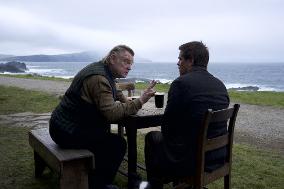
The Banshees of Inisherin: Martin McDonagh’s Horrifying, Laugh-Out-Loud Lyricism
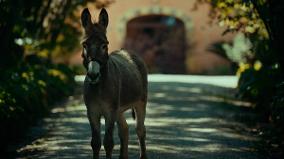
Donkey-Wise The Aesthetics of an Auteur
A Classic Novel, an Epic Film French Cinema at Its Best
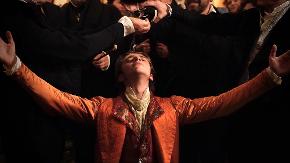
Delivering a grand historical novel to the screen, French filmmaker Xavier Giannoli unfurls the classic with a rush—of excitement, commotion, panache. This is not slow cinema. As the director puts it, his Lost Illusions brings us “the physical sensation of a civilization in full mutation.” And it happens more…
From Finland to Russia with Love An Uncanny Journey, A Filmic Petroglyph

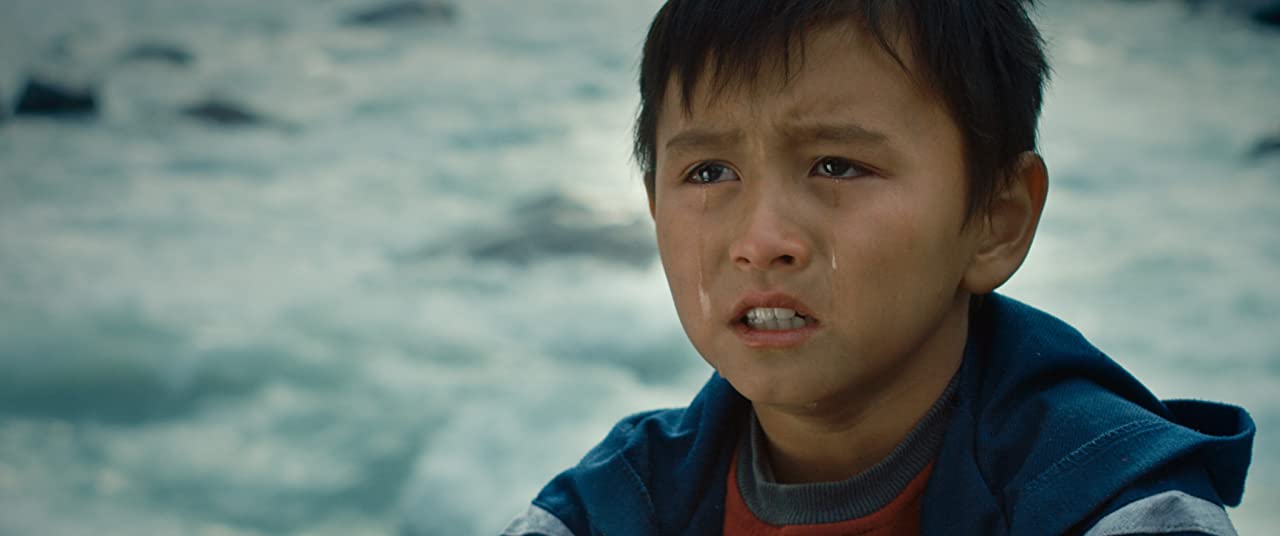
A Mythopoetic Drama in a Girl’s Voice Putting Curaçao on the Map of the World
A Lyrical Essay on Imperialism? Hubert Sauper Pulls It Off
Masculine Desire in South Korea A Dramedy of Errors
Yourself and Yours: Hong Sangsoo Angles in on a New Frame of Mind
Expressing the Female Body Fashioning a New Algeria

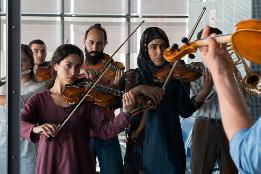
These days when live music concerts are off-limits, it might seem that one obvious reason to look at—and listen to—Crescendo, the new German film by Dror Zahavi, is to enjoy the performances of the classical repertory. Bach, Pachelbel, Dvorak, and Vivaldi are all there, as well as a surprise at the end more...
From the ‘60s to the ‘20s Cinema Novo to Pandemic Cinema
The Past and the Future Look at Each Other in the Mirror
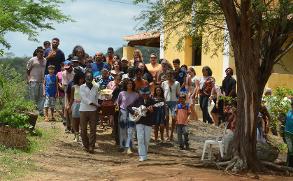
Memory, Art, and Life Writer, Actor, Director
Pain and Glory: The Fearless Intimacy of Pedro Almodóvar

From Jamaica to England to Los Angeles A Novel Fills the Stage and Hits the Screen
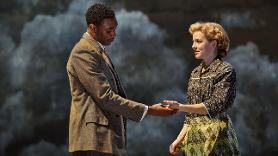
In my research prior to the National Theatre’s staging of Small Island in London in the Olivier Theatre from May 1st-August 10th, there was ever so much to learn, all highly relevant to today’s news stories of related atrocities on the part of the UK's Home Office. An adaptation of Andrea Levy’s novel more…
Young Life on Iran’s Isle of Hormuz Abbas Amini’s Jewell
Hendi and Hormoz Highlights UCLA Celebration of Iranian Cinema
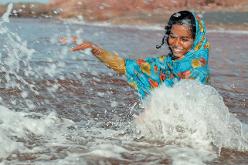
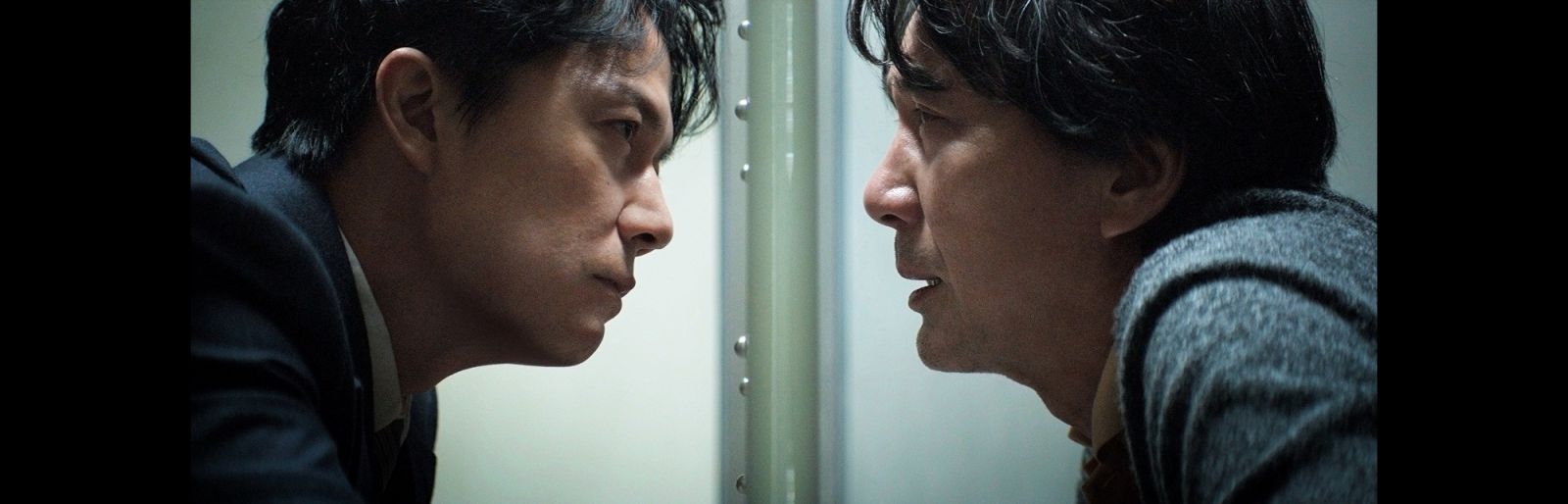
A Debut from Catalonia Personal, Cultural, National
The Chinese Cineaste and the Native Cowboy Up-Close and Personal in the Wild West
Fenced In? Chloé Zhao’s The Rider
Can the Camera Really Change Us? Hong Sangsoo’s Koreans at Cannes
An American Independent Heads for London Couture Talent and Inspiration in Europe’s Muses


Storytelling as History A Hungarian Tableau Vivant
The Story, the Stage, and the Screen in Iran Saedi, Mehrjui, and Farhadi
Asghar Farhadi’s The Salesman: Linda Loman, Alive and Well in Tehran
Glistening Shades of Gray: Philippe Garrel’s In the Shadow of Women
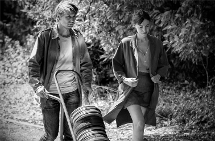
It’s a familiar story, the bohemian in the
shabby French apartment clinging to the lifeline of his art. This one has a wife, but then he takes a
mistress (also familiar enough) and not only that, she takes a lover in
response (also not unheard of). And
Philippe Garrel is certainly not the first to treat such a story. His last film was more...
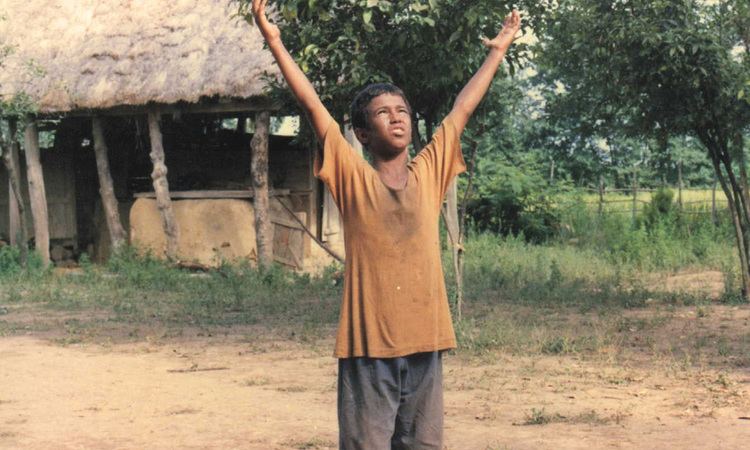
A Bedouin “Western” from Jordan Debuts of Directing and Acting
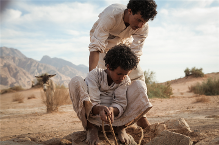
Sinister outlaws call him “little doggie,” but
his name means “Wolf” — Theeb, the 10-year-old boy who faces off with marauders,
freedom fighters, and hired killers in the desert that is Arabia in
1916. Theeb is a film composed with such remarkable symmetry that it
plays like a ballad, not of the Old West of cowboys and sheriffs more...
Disappearance and History Emotions and Aesthetics
Lisandro Alonso, Viggo Mortensen, and Jauja: The Artist’s Way

In faraway Patagonia during the “Conquest of the Desert” in the late 1880s, a Danish Captain, Gunnar Dinesen, has arrived with his 15-year-old daughter, Ingeborg. He will serve as an engineer in the Argentine army during its genocidal war against the indigenous population. Both affectionate and cautious with his daughter, more...
A Romanian Visits the Land of Her Childhood A Documentary that Plays Like Fiction
Waiting for August : Teodora Ana Mihai and the Lyricism of Everyday Life
“Films are always showing us those who leave a
place, and why, and how it goes when they arrive,” said director Teodora Ana
Mihai, introducing Waiting for August
at the Aero Theater in Santa Monica as part of the American Cinematheque’s “New
Belgian Cinema” series. “I wanted to focus on those who remain more...
Ibsen Inspires a French Filmmaker An Actress Takes Her Deepest Breath
Timewaves: Jérôme Bonnell’s Mermaid of Calais in Just a Sigh
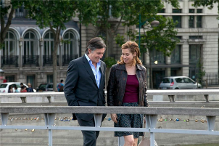
Just a Sigh opens as Alix is waiting in the wings to step onto the
stage in The Lady from the Sea at a
provincial theater in the port
of Calais. Jérôme Bonnell’s film is not exactly an
adaptation of the play, but he catches the breath of Ibsen’s “bright summer day”
— one day — that will end again in
the dark theater the next night more...
Marriage à la Mode Roger Michell’s Salute to Godard
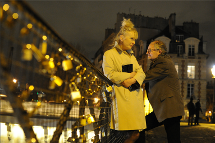
A throwback to the nouvelle vague reveals a second honeymoon that trades yesterday’s nostalgia for today’s realities, and then some, as two of Britain’s best thespians, Jim Broadbent and Lindsay Duncan, are joined by an equally amazing American, Jeff Goldblum, whose intervention sets them reeling… or is it dancing more…
The Odysseus of the Nouvelle Vague The Mermaid Returns the Gaze
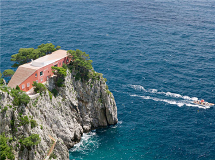
Ponder the cosmos in the eyes of Godard and see his sixth feature film as both the most scintillating capsule of his oeuvre and the most tragic embodiment of his life. Contempt solidly delivers Godard’s vision and his voice, but perhaps like none other of his works, it surprises us with his valor in creating a romantic tragedy more....
Between France
and Senegal Alain
Gomis Is at Work in the Here and Now

From October 3-28, 2013, “Caméras d’Afrique: The
Films of West Africa” at the Los Angeles County Museum of Art’s Bing Theater
and at Loyola Marymount University’s Mayer Theater offers the chance to see
twenty-one films from West Africa through the eyes of the
region’s own filmmakers. A collaboration between more...
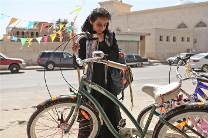
A beautiful bicycle, green as a dream, floats high on the roof of a vehicle that can’t be seen, blocked by a wall along the road it travels. The bike passes swiftly, but its image remains in the afterglow, a desire that becomes a goal for a pre-teen girl who will make this cinema-like fantasy real. In a kingdom where film is banned, more...
An Aesthetic Powerhouse in Chile Violeta Parra and Andrés Wood Both Wear Many Hats

Violeta Parra didn’t “start” at the Louvre. It was one stop on her long path.... She may have been the first Latin American artist—and the first woman—to exhibit there, but she started out in the foothills of the Andes, in a village of southern Chile, with parents who loved music but who gave her a humble life in rural poverty more...
A Rom-Com in China? A Sino-American Co-Production Shows How
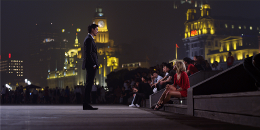
A fish out of water finds a new current and, in the end, manages just "swimmingly," but not before he smears lots of egg on his own face in this bright and breezy sociocultural comedy of manners that shines a new light -- call it Shanghai moonlight and starlight -- on what teamwork really means, whether it be ensemble acting more...
Kiarostami’s Tokyo Affair
A One-Time Painter Plays with a New Idiom
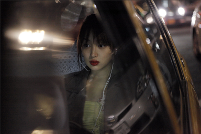
On one level, two local critics pretty much summed it up: “”It’s so real!” one told me; the other, “Very smooth and nice.” Yet Like Someone in Love really shines somewhere between these two lines. Concrete as it is complex, plain and simple as it is intricate, Kiarostami’s greatest and arguably his best is all of a piece more...
Processions of Everyday Life
Miloš Forman’s Czech Films
at UCLA

The UCLA Film and Television Archive is presenting an illuminating treat for film experts and novices alike in “Four by Forman,” a two-part retrospective of the auteur’s work in what was then Czechoslovakia, with Audition and Black Peter on Dec. 1st and Loves of a Blonde and The Fireman’s Ball on Dec.15th more...
Writer-Director Nikolaj Arcel Tells of a Radical Trio Actress Alicia Vikander Speaks of Queen Caroline Matilda
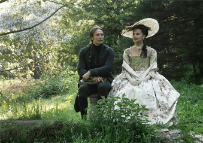
Hot on the heels of its Audience Award for World Cinema at the 2012 AFI FEST and also its double Silver Bear Awards at the Berlinale for Best Screenplay and Best Actor as well as its entry from Denmark in the Oscar race for the year’s Best Foreign-Language Film, A Royal Affair looks like a real crowd-pleaser more....
Lisa Ohlin’s Box Office Hit Based on a Swedish Bestseller
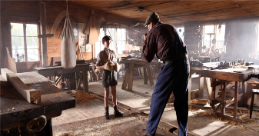
Scenic, voluptuous, pensive, Simon and the Oaks is a classic Bildungsroman that situates itself on the sidelines of history — or so it would seem, but not for long. Reconstructing nary a battle scene or even events that launched or consolidated Hitler’s power in Europe between 1939 and 1945, filmmaker Lisa Ohlin more...
Joshua Marston’s Albania Where Ethnography Meets Epic Drama

There are a number of profound surprises in The Forgiveness of Blood, Joshua Marston’s most recent success as an American independent filmmaker. Like Maria Full of Grace, it also takes up the plight of youths in a violent context by focusing on a severely defined life in a specific region abroad, now northern Albania more...
The Book, the Film, the Music
Art and Politics Always Mix

Early on for Harry Belafonte,
“acting” came to mean social and political “action,” and singing was
its vehicle. If his enthralling and indispensable memoir, My Song, devoured in either sips or gulps,
catapults us to other times and places with immense urgency and verve, the book also
offers a deep reservoir of reflection more...
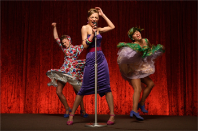
The Russian title for “hipsters,” stilyagi, refers to a youth sub-culture beginning as early as the late 1940s after WWII introduced Western clothes, films and popular music to the USSR. Stilyagi were a “stylists” from head to toe and morning ‘til midnight, defying Soviet codes for conformity in appearance and behavior by more...
Aleksei Fedorchenko Hails from Russia A Fairy Tale from the Volga
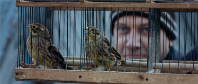
A bicycle makes its way up-screen, as if upstream on a wet road. On the back wheel two birds are perched in a cage. The camera tracks them as they ride, straight ahead through the woods. But then with a jump-cut, the camera still tracking, we see only the rainy road left behind: the rider and birds are now off-screen more...
The World’s Oldest Profession and One of Its Newest
Isabelle Huppert Lights Up the Screen“Nonsense” Makes Sense in Jeanne
Labrune’s Special Treatment

Sans queue ni tête,
the original title of Special Treatment,
can be translated literally to “senseless or disconnected,” or idiomatically to
something one can make neither “head nor tail” of, and this is precisely the
irony upon which Jeanne Labrune plays so exceedingly well in her ninth feature
film. The “nonsense” has more...
Manoel de Oliveira Hails from Portugal The Photographer and His Muse — The Cinema

Manoel de Oliveira must be keenly conscious of the fact that he is probably the only active filmmaker — and one prodigiously at work — whose career spans the nascence of the “talkies” and the embrace of computer generated images, because he has made it his task to probe the stages of the cinema’s development as more...

Our first encounter with the unending grey high-rises that situate Bombay on the map of the world is a street-level tour through the viewfinder of an video camera. In this opening footage of Dhobi Ghat, shot on a taxi ride through the relentless rain that washes the megalopolis of Mumbai, Yasmin, the novice behind the lens more...
A Swedish Debut
A Transitional Point
of View

The Girl unfolds through the innocent eyes of an always curious and sometimes frightened child, one as sensitive to her world as she is withholding of a reaction, and who can be both coy and mortified at turns. But let’s back up. The film opens with an extreme close-up on fidgeting hands and feet as a girl receives an injection more...
The Colombian Tide
Renewing Cinema as an
Art Form
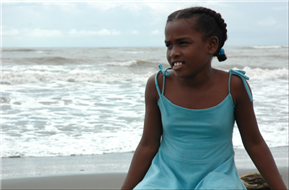
A curious image lingers in the pre-credit sequence of Crab Trap, a stunning feat of neo-existential, “post-exotic” cinema by Colombian writer-director Oscar Ruiz Navia. In the mucky earth, perhaps along a jungle river or en route to the sea, an out-sized shoeprint draws the camera near. From it, a tiny creature struggles to more...
The Russian Master’s Longest Work of Fiction A Georgian-Born Israeli’s Film in English
What an enthralling experience it is to watch The Duel — not so much the duel itself (which in theory could give one the queasy-guilty-perverse sensation of attending a lynching or a day at the guillotine) — but the sparring as it plays itself out in so many words, settings, ideas. Dueling per se was, after all, long out of date by more...
French Producer Par Excellence A Testament of Humbert Balsan’s Living Presence

If ever there were a worthy reason to uphold international participation in cinema production, Humbert Balsan embodied it. So let me begin by looking back, because that is the least that the stunning new film, The Father of My Children, prompts us to do. Some years ago at a prestigious, well-heeled European film festival, more...
A Cineaste Returns to the Classics An Italian Cooks Up a Storm

Word is out: I Am Love (2009) is a feast for the senses. Yet a big part of what writer-director-producer Luca Guadagnino serves up is food for thought, which makes the devouring all the richer. Lest there be doubt, his first feature lays his turf. In The Protagonists (1999), British film star Tilda Swinton takes a film crew to more...
The Paris Opera Ballet A Direct-Access Documentary
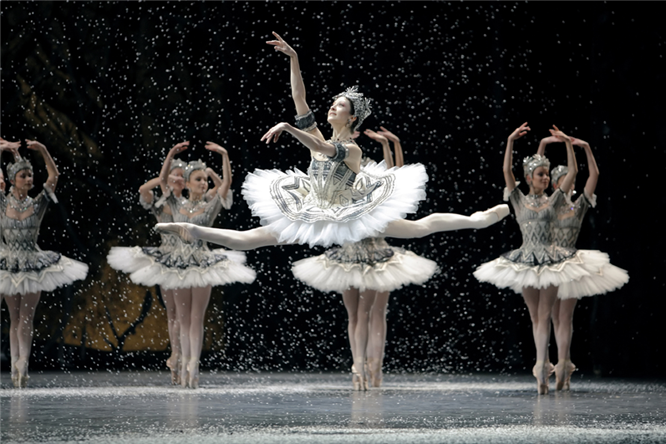
From the grand and stately streets of Paris that deliver us to the front door of the Palais Garnier, we go far below to its dark and seemingly endless catacombs, roaming through them to a room of coiled ropes and pulleys that appear to be part of the stagecraft of the Paris Opera House. Then climbing the stairways of empty halls more...
Between Heaven and Earth Phil Grabsky Captures the Man and His Music
Bigger than Life, Better than Fiction: In Search of Beethoven

Somewhere between heaven and earth, documentary filmmaker Phil Grabsky has managed to locate Ludwig van Beethoven, and to probe him so piercingly that it’s as if the “Lion” himself had sprung from his resting place and said, “Here, take all of me, heart and soul, but don’t miss a note or a beat of it…” more...
Dancing on the Head of a Pin
Keats' Moments of Immortality
“Writ in Water”— Bathed in Light: Campion's Keats in Bright Star
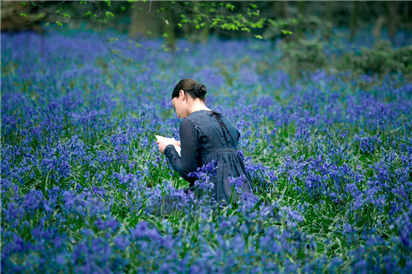
How do we learn about poetry? Through the verses themselves, written and spoken, or possibly through the personal correspondence of the poets or their published discourse on the art? How do we come to understand the wrestling of a poet’s conscience, or to enjoy the beauty of the words? In Bright Star Jane Campion more...
The Real World of the Dardennes The Lyricism of Lorna’s
Silence
“His Name Is Claudy”: The Cinematic Language of Lorna’s Silence
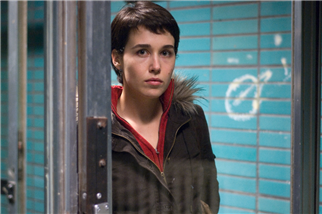
Jean-Pierre and Luc Dardenne, who have made some sixty documentaries in their career, have also consistently disarmed fest-goers, jury members, and filmmakers alike with their five theatrical features made over the last twelve years. For budding independents, these Belgian brothers have become gurus, in a way, modeling more...
Olivier
Assayas Returns to
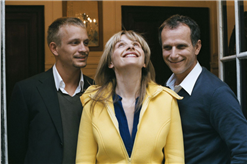
Property and Place in Summer Hours
Shedding Weight in Summer Hours:
Ceylan Visits the Dark Side
Poetic Cinema in Turkey
Flickering Light:

Last year the 61st Festival de Cannes
named Nuri Bilge Ceylan its Best Director.
Not only had he made five features in eleven years, but he was picking
up his fourth major award at that festival in six years,
not counting the two Best Actor awards bestowed on his cast there for Distant (2002). Regardless
of his laurels, more...
Form and Feeling
Discovering an Austrian Auteur
Re-Match in the Woods:
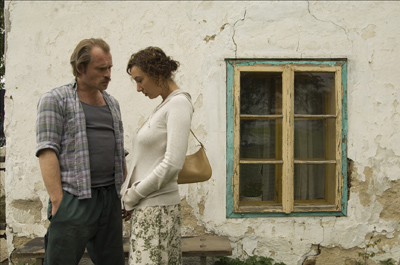
The Vienna Woods has always cut two ways. It played the muse to Schubert’s Lieder, and to Beethoven’s Pastoral and his “Ode to Joy.” But it also saw the Mayerling deaths of Crown Prince Rudolf and Baroness Maria Vetsera, whose ghosts hover there still. Kafka, of all people, is said to have spent happy days more...
Popular Filmmaking in Iran
Majid Majidi Is Back Again
A Fable for Young and Old in The Song of Sparrows
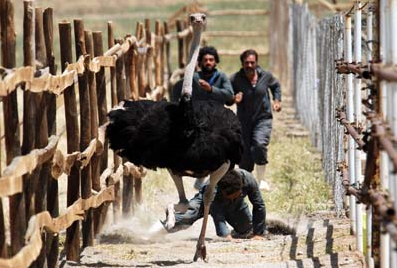
The head of an ostrich is all
eyes and mouth — two-inch-wide eyes that can see forever and the rest, a
long-jawed beak that honks a low sputtering hiss when the bird is under
duress. Its scanty down “hair” stands on
end hiding ears that can hear one of its own feathers fall. Majid Majidi, one of