5-22-26
Nancy Biniadaki’s Maysoon: You May Soon Be Her
By Diane Sippl
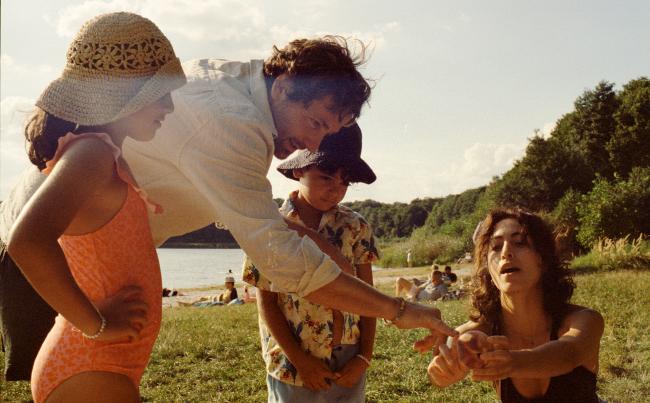
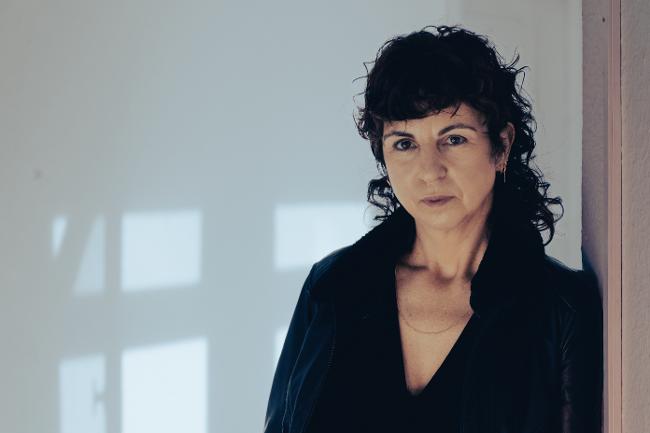
As the Los Angeles Greek Film Festival (LAGFF) celebrates its 20th anniversary this year from May 26-31, 2026, happily it also celebrates women filmmakers, whose work in Greece and abroad it continues to nourish, showcase, and award. This year a gripping co-production between Greece and Germany will be presented by its writer/director, Nancy Biniadaki, who will be attending the festival to hold a Q&A after the screening of her second feature film, Maysoon, on May 26th at the Regal LA Live theater in downtown Los Angeles.
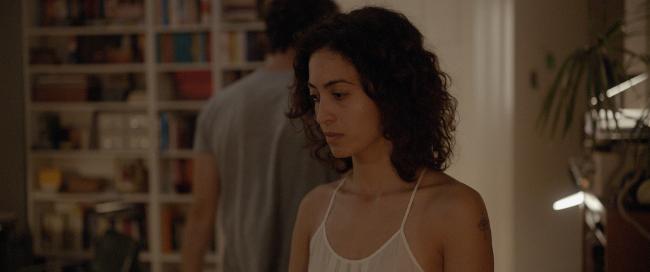
Named for its protagonist, a woman who has left her homeland in Egypt to build a life in Berlin with her companion and their two children, Maysoon is a love story like no other, and yet like many others—all those that tend to get overlooked by men and women alike in democratic societies where they can take for granted their citizenship, their human rights, their social security, and their economic protections via their national constitutions and the safety nets in their routine lives of work and leisure. These days, the map of such societies may seem to be shrinking before our eyes, making Maysoon all the more relevant in our world, especially as women and mothers and children are concerned.
A portrait of ideals, of cross-cultural struggles, and above all, of love, Maysoon presents us with a character we discover slowly; the film tiptoes into her heart and soul with the careful steps of a quiet thriller. Yet no traces of the genre show themselves—this is a mundane mystery catching us in the human thrill of discovering each other and the costs of everyday survival. Or as Cesare Zavattini once put it, “The mystery is in us, and it can be seen as clearly as the veins of leaves.”
Below, KINOCaviar offers a “close-up” of filmmaker Nancy Biniadaki—of her background, her aspirations, and her working process.
KINOCaviar You live in Berlin and you were born in Athens. How did you decide to write and direct a film about an Egyptian woman? Did your story development require much cross-cultural research or imagination on your part? Were producers easy to find?
Nancy Biniadaki As a Greek woman living in Berlin, the ideas of home, identity, belonging, longing for and missing a country, a language, a culture, that's my everyday life. Also, becoming a mother in a different country, without the safety, the emotional and practical support of family and friends, I had a strong personal experience of this loneliness. Furthermore, as a creative artist, and holding job as well, trying to combine all these is quite a complicated situation! These parts of Maysoon’s character I know well, and that was the starting point of this story.
But something more was troubling me when the concept of the script began to get a more concrete form. The #MeToo movement had by then initiated a powerful discussion around the world, and there were so many powerful, moving, shocking stories. Yet I realized that there were women who have gone a long way and have had to fight for far more than I as a European citizen have experienced. I wanted to write the story of a woman who had been fighting in her country of origin for basic rights that most of us take for granted.
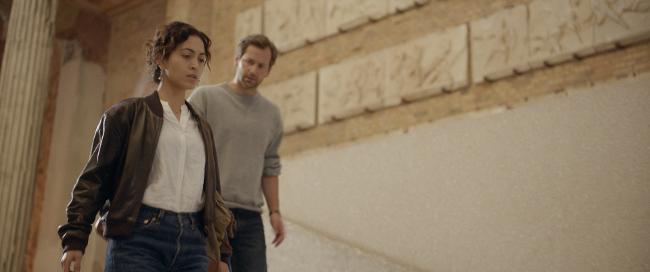
As I was trying to decide on the homeland of my main character, Egypt felt like a natural choice. I had traveled there for a documentary and I’d spent a long time there; I had an image of this country and its people. Greeks feel close to Egyptians, not only from ancient times, but also from the recent history. There were many Greeks living in Egypt until the 1960s, and I knew many of them personally.
In Berlin, there's the wonderful Egyptian collection at the Neues Museum. There's a renowned Egyptology Department at the University. So then, I found a reason why my main character left her country to come to Berlin, since it was almost 10 years after the Egyptian revolution and the Arab Spring. It all made sense! That's how it happens sometimes—you have an initial idea and while working on it, you find out more elements that justify and broaden it, and slowly you realize all the reasons behind this sometimes unconscious first choice. I had to do some research, of course. I met people who helped me. There is an Egyptian community in Berlin, many young people, too, who left the country just as Maysoon did.
The producer of the film was involved from the beginning. We developed the project together from the first idea to the final script and then into production. But it was difficult for the producer to build the financing as a European co-production. It took many years! In the end, we were happy to have Greece on board, so the film is finally made as a Greek-German co-production.
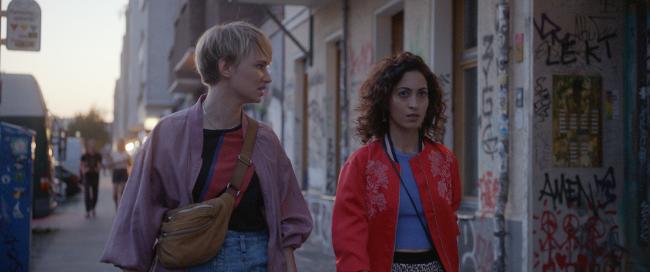
KC Maysoon is a woman who is not only well educated, but who also acts on her political beliefs. What do “justice” and “freedom” mean for Maysoon? Do they mean something different for Tobi? Or for her friend Karen, a German woman about her same age?
NB Thank you for mentioning this. Yes, Maysoon has fought in the streets for justice and freedom and knows that these ideas are not to be taken for granted. They go all the way down to some basic rights, not only in official politics, but also in the personal lives of people, the decisions about what to study, how to live your life, how to choose a partner, especially as a woman. Unfortunately, there are many places in the world where the basic concepts of freedom and justice are not guaranteed for citizens.
Most of us in the so-called “Western” countries believe that we are allowed to take justice and freedom for granted because they are written into our constitutions, and often we forget how important they are. Even worse, we become unaware of the injustice around us. We forget that if we don’t fight for these ideas every day with every little thing that we do—socially, professionally, even privately—if we don’t apply these ideas, they lose their power. For Maysoon, justice and freedom are values that you fight for every day. She is more sensitive to injustice than Tobi, Karen, even me, or the Western audience in general. And her sensitivity affects her deeply and personally.
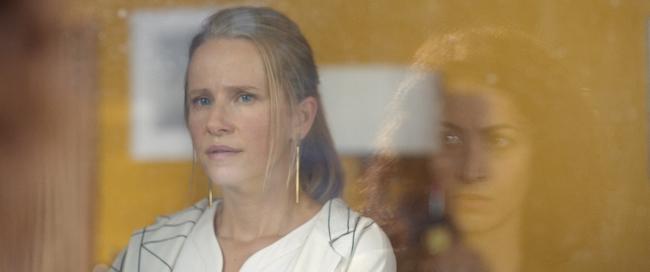
KC How did you decide how much of Maysoon’s past in Egypt to include, either in the ongoing narrative or in her backstory as it gets revealed? I’m considering her precise political activities, her situation as a mother, and her relationship with Tobi, all before she arrived in Germany—how many details did you want the audience to know, and how did you calculate when we should discover these details?
NB The film is a love story that also explores the idea of politics interfering with and affecting people's private lives. I wasn't interested in showing Maysoon’s past in every detail. To me it was more important to follow her journey and let the audience discover the elements of her past that have an impact on her present—on her psychological and mental situation on the one hand, and on her practical status, her position in Germany, on the other hand. I wanted to avoid exposition, explaining all the details. I decided to let the narrative reveal the backstory, as in a thriller somehow, to let the audience discover those elements that are necessary to understand the main character’s emotional plight. The film is more a psychological portrait of a person in crisis, not merely a political, historical or social drama.
KC I believe it’s the third time we see the character Maysoon performing her job at the museum, guiding a group of German women through artifacts of ancient Egypt, that the women in the tour group laugh at her for “praying to an Egyptian god.” Does she experience a kind of “breakdown” in reaction to their sneers and ridicule? Have you observed how film audiences in the theater interpret Maysoon in this moment?
NB Maysoon loves her work in the museum, and she feels personally connected to the artifacts. She loves her science, not only as an Egyptian, but as an archeologist. We see her experiencing nice moments at work and also small, everyday racist comments that she deals with respectfully and calmly.
But when she gets into a situation of fear and insecurity because she experiences this huge breakdown in her personal life, she loses the ability to deal rationally with difficult situations. Moreover, although an atheist, she feels the need to hold on to something, to any higher power—a need that she had never before experienced. That's why she's praying. And that's why she cannot deal anymore with the culture clash to which she had already become accustomed. That's what breaks the glass in the museum, so-to-say: this condensed, huge, emotional power, intensified by fear.
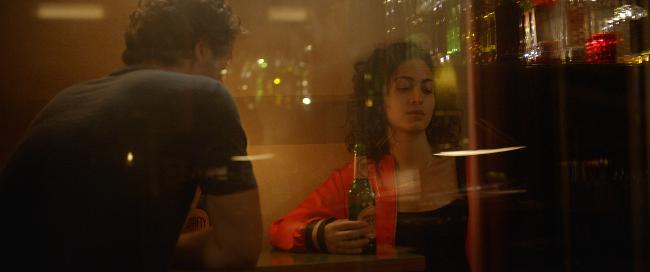
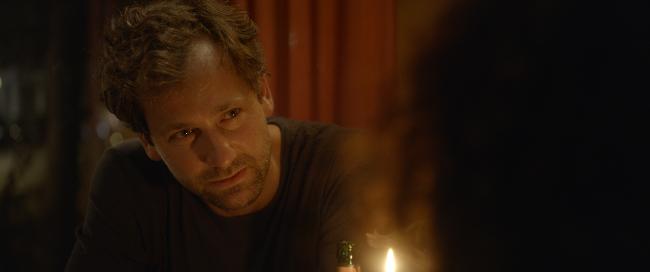
KC Your actors embody their roles brilliantly. Their friction is so real. How did you cast your leads, Maysoon and Tobi, and how hard was it to find and work with the children?
NB I was really blessed to work with these wonderful actors, Sabrina Amali and Florian Stetter! I'm grateful that we established an honest, trustful relationship from the beginning. We were lucky to have a wonderful casting director, very experienced, who was on board early, loved the script, and supported it. He helped us to find not only the suitable actors for each role, but also the right people to work with, people with whom we could communicate well. The same goes for all the roles! We had great actors even in small roles. I treated even the small scenes as one-act plays.
Especially concerning the main actors, I like to have them attached already in the late stages of the scriptwriting process. We would meet to discuss the scenes, and they slowly brought elements from their experiences and their personalities; I would make changes according to these discussions, and then we would read and discuss again. It was a wonderful, creative process. In the end, they knew the characters better than I did—they became the characters.
My work consists exactly of finding the character and getting the real emotion of each scene. Sabrina and Florian allowed themselves to follow this method. I would discuss with them the dramaturgy of each scene, but the dialogue was not important, except for some key lines that I would point out. I believe that when actors know the character deeply, they can't do wrong. It's risky. It's free. It's tiring, but it's fascinating. We had long rehearsals, but when we found ourselves at the point of realizing the core of a scene, we stopped. We never developed a scene to the end. We left room for improvisation, for the unexpected, during the shooting. I wanted them to be surprised. And I'm happy that they took this risk!
For Maysoon, the casting was a longer and more complicated process, because we were looking for an actress who could speak German and Arabic, who had an Arabic background, and knew the culture. But it was immediately clear, even on the first casting day, that Sabrina was the right person, somebody with whom I could communicate well and deeply. And I'm grateful that she accepted the challenge because the film is really based on her. She is so talented, so charismatic, and she trusted my vision. Together we created this powerful character who’s so real. What more can a director ask for?
The children were difficult to find because they needed to speak Arabic and German and also to be able to act. It took a very long time. In the end, we found these two wonderful children who had no experience at all. But I decided to take the risk because they were so intelligent and sensitive, and the fact that they hadn't worked before made them open to my approach to acting. We collaborated with an amazing acting coach for children, and we agreed to work in the same direction as I did with the adults. The kids didn't learn to act emotions. They learned their characters and their environment. They became members of this fictional family and learned to react to situations. Their reactions are authentic. They played—kids at their primitive level know how to play for real!
The whole crew, of course, supported this process, by creating the atmosphere on set that is necessary for this honest, deep, emotional acting.
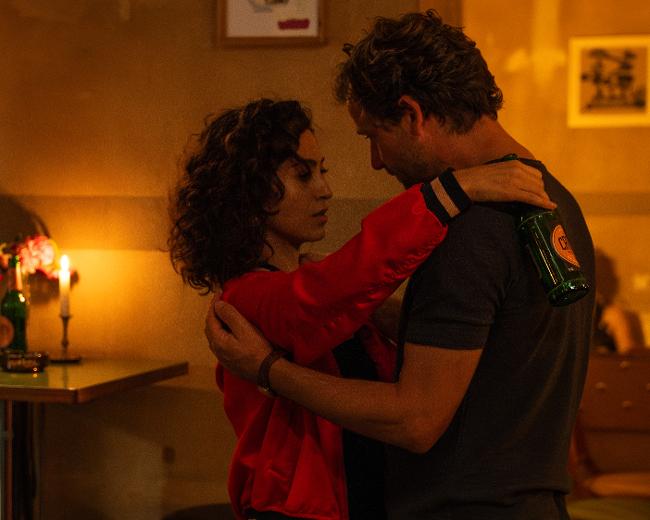
KC The dialogue and dramatic development is utterly convincing, particularly between Maysoon and Tobi as their personal conflict advances. It strikes me as carrying the authenticity of theatrical writing for the stage. Do you have experience with playwriting? Which do you enjoy more, screenwriting or directing?
NB That’s a wonderful thing to hear! I see myself as a writer/ director. I write, in my own personal way, the stories that I want to direct. Writing is a very lonely process. It's exhausting. I think I prefer directing, interacting, collaborating with all these creative people. But overall, directing a story that I've conceived and written is such an amazing experience, a life-changing journey.
I’ve always loved literature. My background is my love for text and storytelling. I first studied classical literature at the university, philology. And then I went to film studies, directing and scriptwriting. But I was lucky to work closely, for many years, in the theater and the opera with renowned Greek directors whom I consider my mentors. This is where I learned theater, working with actors and dramaturgy. I think that's definitely affected the way I see and do films as well.
KC Why was the character of Maysoon’s mother important, even if she’s off-screen? I found the wisdom of the film in the “surrogate” mother from Alexandria—do you agree?
NB I'm happy that you mention this, and that it worked for you. As a mother, especially coming from the South, most of us have learned to be close with our families, with the women of our families, especially, mothers, sisters, grandmothers, and female friends, too. We miss this supportive circle when we live abroad. Becoming a mother in another country is a lonely thing.
But also, in general I think that when you become a mother yourself, and you constantly give so much, sometimes you feel there is no one to support you in this huge emotional overload. No one to really take care of you. Often we miss a mother more than we need a partner, I believe.
In Maysoon’s case, the mother represents her home, too, both family and homeland. If she doesn't make peace with her mother, she can't make peace with herself, she can’t deal with the pain and the loss from her past.
KC The film’s images of water (the lake) offer some ravishing cinematography. What was your shooting location? Is water symbolic for you (and, I assume, Maysoon)?
NB The scenes at the lake were shot just outside Berlin, at a wonderful lake inside a forest. It was late summer, though, so it wasn't always very warm. It was quite challenging for everyone, especially for the children and Sabrina.
Yes, the water is a symbol, in all cultures, in religion, too, even in psychology. But I don't really work with symbols. If an image works this way, and the audience interprets it as a symbol, that's fine. But I want to keep the various references open—from the soothing water as a source of life, to the Mediterranean Sea, the sea of the culture where I come from, where Maysoon comes from, where so many people, so many women and children, too, are lost in the desperate attempt to find safety and the perspective of a new life in justice and freedom. The references are endless.
KC In terms of the many “hats” you wear in the performance arts, where do you see yourself headed? Do you have a third feature film in the works, or at least in mind?
NB I am already writing the next script. And I have various other ideas that I would like to develop. There are so many stories I want to tell. Especially stories of women told by me, a woman.
KC The world needs your stories, and I can’t wait to see more of them on the screen!
Maysoon
Producer: Christopher Zitterbart; Director: Nancy Biniadaki; Screenplay: Nancy Biniadaki; Cinematography: Jean-Marc Junge; Editor: Panos Voutsaras; Music: Thalia Ioannidou; Production Design: Anne Zentgraf; Sound Design: Yannis Antipas; Costumes: Sabin Gröflin.
Cast: Sabrina Amali, Florian Stetter, Susanne Bormann, Vivian Daniel, Heike Hanold-Lynch, Maya Ghazal, Karyofyllia Karabeti, Deborah Kaufmann, Mehdi Meskar, Josef Mohamed, Bianca Nawrath, Salma Said, Patrick Schlegel, Elias Sououd, Marie Tragousti, Zoë Valks, Katharina Wittenbrink.
120 min., Digital, Color. In German and Arabic with English subtitles.
Tickets: www.lagff.org